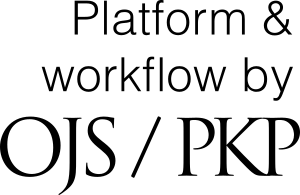
Knowledge, Attitudes, and Behaviors of Non-Health Study Program Students at Padjadjaran University Regarding Use of Halal Cosmetic Products
DOI:
https://doi.org/10.70410/jfg.v13i2.444Keywords:
Halal cosmetics, knowledge, attitudes, decision-making behavior, non-healthcare studentsAbstract
In Indonesia, cosmetic products are required to obtain halal certification, as stipulated in Law No. 33 of 2014 on Halal Product Assurance (Jaminan Produk Halal/JPH), which states that the government is responsible for implementing the halal assurance system. This requirement is further reinforced by Article 141 of Government Regulation No. 39 of 2021, which regulates the mandatory halal certification of cosmetic products until October 17, 2026. One of the challenges in halal certification for cosmetics is the use of imported raw materials whose halal status cannot always be guaranteed. This condition may influence consumers’ decisions regarding the selection and use of halal cosmetic products. This study aimed to assess the knowledge, attitudes, and behaviors of non-health students at Universitas Padjadjaran regarding the use of halal cosmetic products. A descriptive cross-sectional study was conducted using an online questionnaire. A total of 248 students aged ≥18 years were consecutively recruited, and data were collected from April to May 2023. Data were analyzed using the chi-square, Kruskal-Wallis, and Spearman’s rho tests with SPSS version 28. The results showed that 59.27% of non-health students had a positive level of knowledge regarding halal cosmetic products. More than half of the respondents demonstrated positive attitudes and behaviors toward the use of halal cosmetics, with percentages of 56.45% and 60.89%, respectively. Age was significantly associated with behavior in usage decisions (p=0.008; OR=1.607; 95% CI: 0.939–2.751). Faculty differences were also significantly associated with knowledge (p=0.006), attitudes (p<0.001), and behavior in usage decisions (p=0.005). Overall, non-health students at Universitas Padjadjaran demonstrated positive tendencies in knowledge, attitudes, and behaviors toward halal cosmetics, with positive correlations among these variables in their decisions to use halal cosmetic products.
Downloads
References
Badan Pengawas Obat dan Makanan Republik Indonesia (BPOM) (2019) Peraturan Kepala Badan Pengawas Obat dan Makanan Republik Indonesia Nomor 23 Tahun 2019 tentang Persyaratan Teknis Bahan Kosmetika. Jakarta: BPOM.
Borzooei, M. and Asgari, M. (2013) ‘The halal brand personality and its effect on purchase intention’, Interdisciplinary Journal of Contemporary Research in Business, 5(3), pp. 481–491.
Bryman, A. and Bell, E. (2007) Business Research Methods. New York: Oxford University Press.
Charan, J. and Biswas, T. (2013) ‘How to calculate sample size for different study designs in medical research’, Indian Journal of Psychological Medicine, 35(2), pp. 121–126.
Churchill, G. (2005) Dasar-Dasar Riset Pemasaran. Jakarta: Erlangga.
Council for International Organizations of Medical Sciences (CIOMS) and World Health Organization (WHO) (2002) International Ethical Guidelines for Biomedical Research Involving Human Subjects. Geneva: CIOMS and WHO.
Hutamin, A.S. (2019) ‘Impor bahan baku kosmetik capai 90%, Kemenperin upayakan investasi intermediate produk’, Gatra.com. Jakarta: PT Index Kelompok Gramedia.
LPPOM MUI (2008) Panduan Umum Sistem Jaminan Halal LPPOM-MUI 2008. Jakarta: Lembaga Pengkajian Pangan, Obat-obatan dan Kosmetika Majelis Ulama Indonesia. Available at: https://halalmui.org/pemeriksaan-kehalalan-produk/ (Accessed: 9 February 2023).
Maharani, K.N. and Silvia, A. (2019) ‘Analisis pengaruh pengetahuan dan religiusitas terhadap niat pembelian produk kosmetik halal’, Al-Urban: Jurnal Ekonomi Syariah dan Filantropi Islam, 3(1), pp. 81–94.
Malhotra, N.K. (2012) Basic Marketing Research: Integration of Social Media. Harlow: Pearson.
Mathieson, K. (2014) ‘Making sense of biostatistics: Probability versus nonprobability sampling’, Journal of Clinical Research Best Practice, 10(8).
Ningrum, E.L. (2019) ‘Hubungan pengetahuan dan sikap mahasiswa dengan perilaku penggunaan kosmetik tata rias wajah berlabel halal’, e-Journal, 8(1), pp. 57–63.
Notoatmodjo, S. (2012) Metodologi Penelitian Kesehatan. 2nd edn. Jakarta: Rineka Cipta.
Notoatmodjo, S. (2014) Ilmu Perilaku Kesehatan. Jakarta: Rineka Cipta.
Priyatno, D. (2011) Buku Saku Analisis Statistik Data SPSS. Yogyakarta: MediaKom.
Rahman, A.A., Asrarhaghighi, E. and Rahman, S.A. (2015) ‘Consumers and halal cosmetic products: Knowledge, religiosity, attitude and intention’, Journal of Islamic Marketing, 6(1), pp. 148–163.
Schober, P. and Schwarte, L.A. (2018) ‘Correlation coefficients: Appropriate use and interpretation’, Anesthesia & Analgesia, 126(5), pp. 1763–1768.
Setiadi, N.J. (2003) Perilaku Konsumen: Konsep dan Implikasi untuk Strategi dan Penelitian Pemasaran. Jakarta: Kencana.
Sholikhah, B., Fitri, R. and Mahanani, Y. (2021) ‘Analisis pengambilan keputusan pembelian kosmetik berlabel halal MUI pada generasi millenial’, Al Maal: Journal of Islamic Economics and Banking, 2(2), pp. 193–211.
Sugiyono (2017) Metode Penelitian Pendidikan: Pendekatan Kuantitatif, Kualitatif, dan R&D. Bandung: Alfabeta.
Downloads
Published
How to Cite
Issue
Section
Citation Check
License
Copyright (c) 2026 Norisca Aliza Putriana, Muhammad Dimas, Patihul Husni, Mayang Kusuma Dewi, Soraya Ratnawulan Mita

This work is licensed under a Creative Commons Attribution 4.0 International License.
Authors who publish in Jurnal Farmasi Galenika agree to the following terms:
This license enables reusers to distribute, remix, adapt, and build upon the material in any medium or format, so long as attribution is given to the creator. The license allows for commercial use. CC BY includes the following elements:

BY: credit must be given to the creator.
You are free to:
- Share — copy and redistribute the material in any medium or format for any purpose, even commercially.
- Adapt — remix, transform, and build upon the material for any purpose, even commercially.
- The licensor cannot revoke these freedoms as long as you follow the license terms.
Under the following terms:
- Attribution — You must give appropriate credit , provide a link to the license, and indicate if changes were made . You may do so in any reasonable manner, but not in any way that suggests the licensor endorses you or your use.
- No additional restrictions — You may not apply legal terms or technological measures that legally restrict others from doing anything the license permits.
Notices:
You do not have to comply with the license for elements of the material in the public domain or where your use is permitted by an applicable exception or limitation .
No warranties are given. The license may not give you all of the permissions necessary for your intended use. For example, other rights such as publicity, privacy, or moral rights may limit how you use the material.